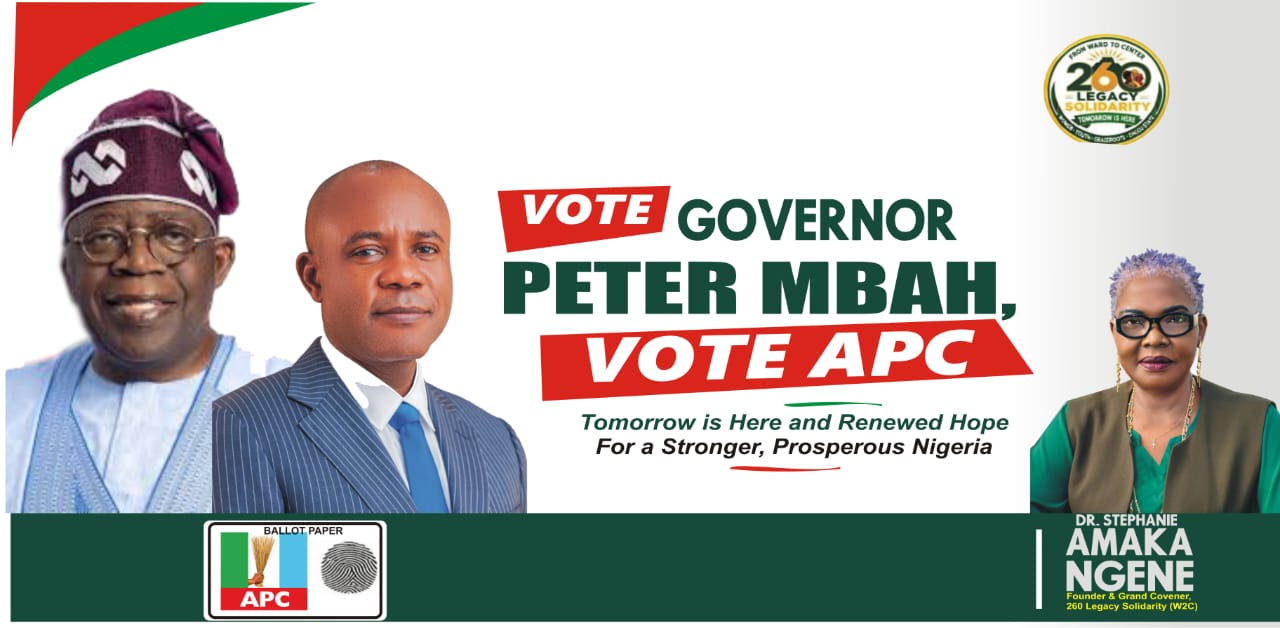

By Dr. Collins Ogbu, Esq.
Thank you for reading this post, don't forget to subscribe!When Peter Ndubuisi Mbah took over Enugu in 2023, he inherited a state that many economists had written off as a civil service state; a state where salaries were the economy, where government properties were rotting, and where the best brains were leaving. What others saw as pain, stress and liability, Mbah saw as prosperity waiting to be unlocked. It was the instinct of an oil mogul. As founder of Pinnacle Oil and Gas, the man who built one of the largest downstream petroleum logistics empires in West Africa, Mbah had spent two decades turning high-risk, capital-intensive infrastructure into profit. He did not come to Lion Building to share allocation; he came to build an economy.
That antecedent explains his first major philosophy: Enugu does not need to tax its people to death to develop; it needs to make its dead assets work. In 2025, only about 12.6% of Enugu’s total revenue came from tax. The rest came from what this government calls asset capitalisation and revitalisation. Hotel Presidential, abandoned for over a decade and turned into a home for reptiles, is back as a 5-star hospitality asset. Nigergas, dead for 30 years, is now producing gas. The moribund Sunrise Flour Mills in Emene, the Enugu State Medical and pharmaceutical enterprises, the old trade fair complex, and dozens of state-owned quarters and lands that PDP administrations left to decay have been audited, revalued, concessioned, and brought back to life. A leader who sees a dead factory and sees jobs and exports is different from a leader who sees only scrap.
Alongside the old, Mbah is building the new with a speed that unsettles his critics. Enugu Air, the best state-owned commercial airline in Nigeria’s history, is not a vanity project; it is a logistics backbone for the South-East’s traders, tech founders and diaspora investors. The 260 Smart Green Schools — one in every ward — with solar power, digital boards, robotics labs, and free feeding, are turning Enugu’s children from 3rd world learners to 1st world competitors. The 260 Type-2 Primary Healthcare Centres, the Enugu Tech Hub and Innovation Park, the 5,000-shop International Market, the new Enugu City and the $100m Enugu Industrial Park are all built on one logic: infrastructure that saves lives and makes money at the same time.
This is where his education and career prepared him. A lawyer, with a Master’s in Business Administration from Lagos Business School and executive education from Harvard, Oxford and Stanford, Mbah governs like a CEO, not a politician. He introduced e-governance and GIS-based land administration that cut land fraud and raised internally generated revenue without raising rates. He used technology to block touts and leakages in tax collection, so that compliance, not burden, increased revenue. The same discipline that made Pinnacle Oil survive subsidy shocks is the discipline that made Enugu attract over N2 trillion in private sector commitments in two years; more than any other South-East state.
His model is unapologetically neoliberal, and it is paying off. Like Deng Xiaoping in 1978, who said “it doesn’t matter whether the cat is black or white, as long as it catches mice,” Mbah removed ideological barriers and invited private capital into agriculture, transport, energy and tourism. Like the early Chinese leaders who used Special Economic Zones to lay the foundation for a technological revolution, Mbah has used Enugu’s Free Trade Zone, the Enugu Tech and Innovation ecosystem, and the new transport terminals to create an environment where government enables and private sector drives. The result: Enugu’s GDP, projected at N4.4 billion in 2023, is on track to hit his $30 billion target by 2031, with agriculture alone moving from subsistence to mechanized clusters producing for export.
It is therefore not exaggeration to call him the Lee Kuan Yew of Enugu. Lee took Singapore from a 3rd world port with no resources in 1965 to a 1st world financial hub in 30 years through discipline, meritocracy, housing, education and zero tolerance for corruption. Mbah is applying the same template: clean streets, water in every home under 180 days, security through AI-enabled command centres, and a civil service retrained for productivity. Where Lee built HDB flats, Mbah is building Smart Schools. Where Lee built Changi Airport, Mbah is building Enugu Air and an international cargo terminal. The ambition is the same; move a people from survival to prosperity within a generation.
Compared to his peers in Nigeria today, Mbah stands apart. While many governors still depend on FAAC and lament subsidy removal, Mbah is the perfect example of a leader who has used the proceeds from subsidy removal judiciously. The extra allocation from Tinubu’s reform has not gone into convoys and celebrations in Enugu; it has gone into roads, water, schools, hospitals and productive assets that will outlive this administration. That is why development economists now place Enugu’s transformation side-by-side not with other Nigerian states, but with the massive revolutions in Rwanda under Kagame, Ethiopia under its industrial park model, and Kenya under its Silicon Savannah. All three moved from poverty to middle-income thinking by betting on technology, infrastructure and human capital; exactly what Enugu is doing.
The prospects are even greater. With Enugu Air connecting the South-East to the world, with the Smart Schools producing 300,000 digitally literate children by 2027, and with the revived assets now generating sustainable income, Enugu is no longer begging for development; it is exporting it. The state that was once the headquarters of the old Eastern Region is becoming the headquarters of a new economic region.
If Mbah can do this in Enugu in three years, Nigeria should imagine what he can do in eight years as President. He is the reliable leader who can take Enugu and indeed Nigeria out of the shackles of poverty, underdevelopment and inequality; not by slogans of “No Tax,” but by the sober, evidence-based work of turning dead things to living things, and new ideas to new wealth.
Enugu was once the coal city. Under Mbah, it is becoming the productivity city. And that is the real revolution.
TomorrowIsHere
Discover more from REFMEDIAGIST
Subscribe to get the latest posts sent to your email.